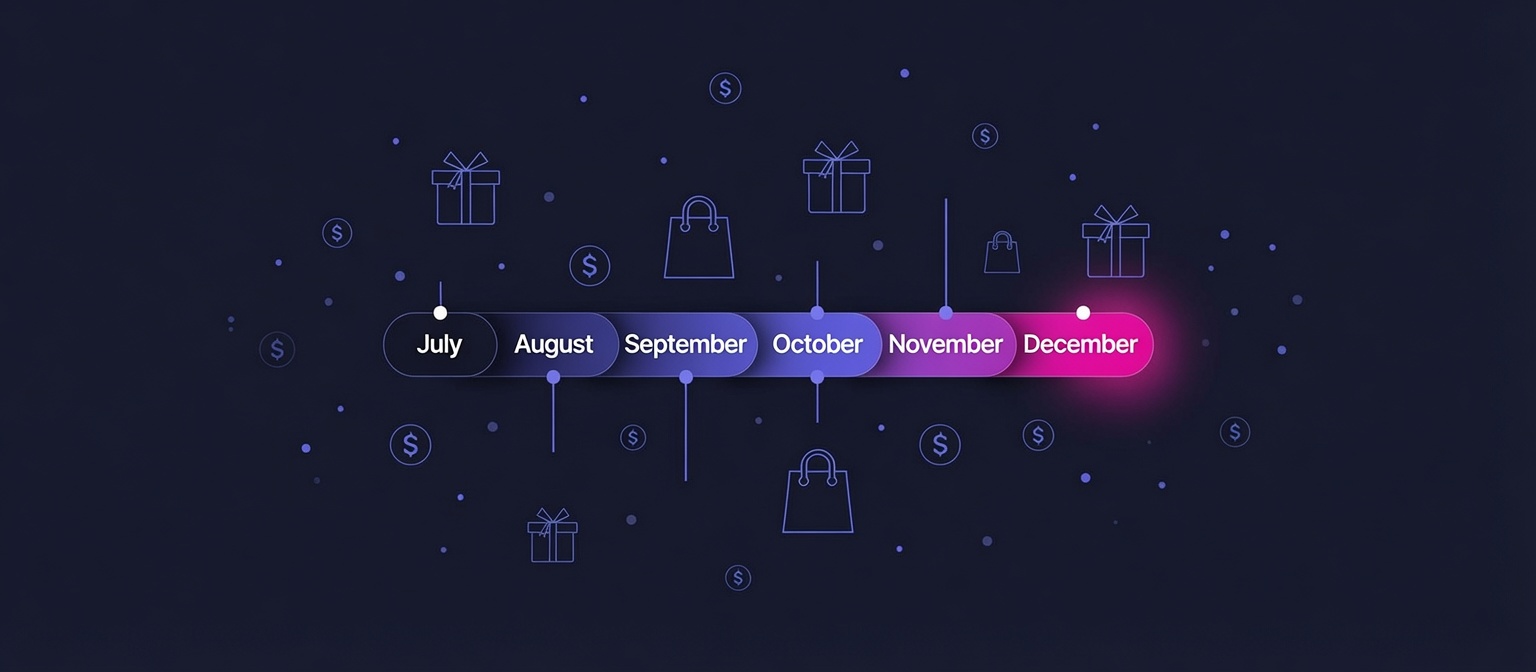
Q4 Sponsorship Playbook: How to Land Holiday Brand Deals Before Everyone Else
Q4 is the highest-paying quarter for creators — but only if you start pitching in July. Here's the exact month-by-month playbook for landing holiday brand deals, with rate premiums, pitch templates, and the insider timeline brands actually operate on.
It's July. Your Q4 Competitors Already Have Signed Contracts.
It's December 15th. Your feed is full of creators unboxing PR packages, posting #ad holiday content, getting paid $2K–$10K per post. You're watching from the couch wondering how they got those deals. Here's the uncomfortable truth: they pitched in July.
(Yes, July. I know it feels absurd when you're still in shorts.)
But that's exactly how Q4 brand deals work. The creators consistently landing holiday sponsorships aren't luckier than you. They aren't more talented. They just understand one thing: brands plan holiday campaigns on a corporate calendar, not a creator calendar. And that calendar starts months before a single gift guide goes live.
Here's the reality: Q4 is the highest-earning quarter for creators. October through December is when brands spend the most, pay the most, and compete hardest for creator slots. But you only benefit from that spending surge if you treat Q4 like a campaign — not a last-minute scramble.
The brands you want to work with? Their budgets are finalized in July and August. Creative briefs go out in September. Content ships October through December. If you're not in the conversation by late summer, you're not in the conversation at all.
This post is your complete playbook for landing holiday brand deals — month-by-month from July through December, with exact rate premiums, pitch templates, and the insider timeline brands don't publicly share.
Why Q4 Is the Creator Pay Day (And the Numbers to Prove It)
Let's talk money. Real numbers.
Brands allocate 25–40% of their entire annual influencer marketing budget to Q4. A quarter of the year gets nearly half the money. That's not a slight seasonal bump — that's a fundamentally different economic environment.
Why do rates go up in Q4? Three forces collide:
- Competition for creator slots. Brands are all chasing the same holiday audience simultaneously. Creator calendars fill up. Scarcity drives price.
- Higher ROAS expectations. Consumers are in buying mode. Brands know sponsored content converts better, so they pay more.
- Urgency spending. "Use it or lose it" budgets dump remaining funds into Q4 campaigns.
The categories that spike hardest: beauty and skincare, tech and gadgets, fashion, food and beverage, home goods, toys, and subscription boxes.
(If you've ever wondered why that creator with half your engagement is posting luxury hauls in November — this is why. They pitched early and named a number.)
And the compounding effect: Q4 deals frequently lead to Q1 renewals. One well-executed holiday partnership can turn into a year-long relationship.
How much more can creators charge in Q4? Creators can typically charge 20–50% more during Q4 compared to standard rates. The premium varies by platform and niche, with demand driving prices up across the board.
Here's how those premiums break down. Use these when setting your Q4 rates — and if you need help with your baseline, check our guide on how much to charge for sponsored posts.
| Platform | Typical Q4 Rate Premium | Peak Timing | Notes |
|---|---|---|---|
| Instagram (Reels) | +25–40% | Nov 1 – Dec 15 | Gift guides drive highest rates |
| TikTok | +30–50% | Oct 15 – Nov 30 | Black Friday content books earliest |
| YouTube (integrated) | +35–50% | Oct 1 – Dec 20 | Longest lead time required |
| YouTube (dedicated) | +40–60% | Nov 1 – Dec 15 | Limited slots = highest demand |
| Blog/Newsletter | +20–30% | Nov 1 – Dec 20 | Gift guide roundups perform best |
| +20–35% | Sept 15 – Dec 25 | Evergreen holiday content |
How Brands Actually Plan Holiday Campaigns (The Timeline They Won't Tell You)
Here's something that changed how I think about brand partnerships entirely: brands don't operate on creator time. They operate on corporate planning cycles. And those cycles start way earlier than most creators realize.
The Brand-Side Holiday Calendar
- June–July: Strategy decks. The team builds their Q4 proposal — themes, platforms, target audiences, creator tiers.
- July–August: Budget approval. Finance signs off. Roster planning begins.
- August–September: Creator outreach. This is the window. Pitches get read. Selections are made.
- September–October: Contracts signed. Rates negotiated, deliverables locked, timelines confirmed.
- October–November: Content production. Creators filming, brands reviewing.
- November–December: Content goes live.
Picture this: A brand marketing manager named Sarah has 14 creator slots for her November campaign. It's August 20th. She's already filled 11. The remaining 3? She's choosing between 40+ pitches. By September 5th, her roster is locked. Done. She's not looking at pitches anymore — she's reviewing content drafts.
When should I start pitching for holiday brand deals? Start in July or August — at minimum 2–4 months before the campaign goes live. Brands finalize Q4 creator rosters by mid-September. Pitching in October or November means most budgets are already allocated.
Marketing teams go into production mode around mid-September. After that, the person who reads pitch emails is literally not reading pitch emails anymore.
There's one more concept: budget dust. Leftover money surfacing in late November — brands that underspent or campaigns that fell through. Don't wait for budget dust. Those deals pay less, have tighter turnarounds, and rarely lead to renewals. You want the main course, not the scraps.
Your Q4 Playbook: Month by Month, July Through December
This is where strategy becomes action. Each month builds on the last. Skip one, and the next gets harder.
July — Research & Position
This is the unsexy month. No pitches yet. Just prep. But this is where the game is won.
- Audit your content for holiday alignment. Gift guides, unboxings, product favorites, seasonal routines — identify what your audience responds to.
- Research brands that ran Q4 campaigns last year. Check niche hashtags from Oct–Dec 2025. Note who worked with creators at your level.
- Update your media kit with Q4-relevant metrics. Holiday engagement data, audience purchasing behavior, seasonal performance. Here's how to build one that gets responses.
- Build your target brand list — 50 to 100 brands. Tier them: dream brands, realistic brands, easy wins.
- Set your Q4 rates. Standard rate plus seasonal premium (20-50% bump).
None of this is glamorous. Nobody's posting their spreadsheet of 80 brand contacts on Stories. But the creators who book five-figure Q4 deals? They all did this part.
August — First Pitches Go Out
August is when you actually hit send. Your palms might sweat. That's fine.
- Send pitches to your top 20 brands. Personalize every one. Reference their past campaigns, products, aesthetic.
- Frame your pitch as solving their problem. You're offering to help fill their Q4 content calendar — not asking for a favor.
- Mention October–December availability explicitly. This signals professionalism.
- Set follow-up reminders for 5-7 business days.
- Start posting pre-holiday content that signals seasonality to brands watching.
(Pro tip: Tuesday through Thursday mornings get the best open rates. Mondays are inbox chaos. Fridays are mentally gone.)
Need the full pitch framework? Here's our complete guide to pitching brands.
Subject: Holiday Content Partnership — [Your Niche] Creator, [Follower Count]
Hi [Name],
I noticed [Brand] ran a gorgeous holiday campaign last year with [specific detail]. I'd love to be part of your Q4 2026 lineup.
I'm a [niche] creator with [follower count] on [platform] — my audience is [key demographic]. Last holiday season, my gift guide content averaged [engagement metric], and my audience actively shops the products I recommend.
I'm available for October through December content and can work across [formats]. I'd love to chat about what you're planning.
My media kit is attached, and you can see my portfolio at [link].
Would a quick call next week work?
[Your name]
Why this works: Leads with a specific compliment (proves research), establishes value with metrics, states availability clearly, and ends with a low-commitment ask. Confident without being pushy.
September — Follow Up & Second Wave
September is when you'll start getting yeses. And a lot of silences. Both are normal.
- Follow up on every August pitch that didn't get a response. One follow-up can double your response rate.
- Send second wave to brands 21-50. Same quality, same personalization.
- Negotiate rates firmly. Q4 demand justifies premium pricing. Don't cave.
- Start booking your content calendar. Leave buffer for production quality.
- Watch for brand RFPs and casting calls. A solid CRM helps track all of this.
This is also when you'll see other creators announcing deals. Don't panic. There are hundreds of brands spending money — you only need a few.
Subject: Re: Holiday Content Partnership — Quick Follow-Up
Hi [Name],
Just bumping this up — I know Q4 planning gets hectic on your end. I'm still available for holiday content in October–December and would love to collaborate with [Brand].
Since my last email, I've [one new proof point]. Happy to jump on a 15-minute call this week if it's easier than email.
Either way, no pressure — I know your inbox is a warzone right now.
[Your name]
Why this works: Empathetic, adds new value, low-friction alternative, zero pressure. Says "I'm a professional" not "why haven't you answered me."
October — Lock In & Produce
October is execution mode. If you did July–September right, you're choosing which deals to take.
- Finalize contracts and deliverables. Get everything in writing.
- Begin content production — aim to deliver early. Brands love ahead-of-schedule creators.
- Last-chance outreach to late-decider brands. Some don't finalize until October.
- Negotiate usage rights carefully. Q4 content has long-tail value — don't give that away free.
It's okay to turn down a deal that undervalues you — even in Q4. A bad deal costs you time you could've spent on a better one.
November — Deliver & Capitalize
November is payday month. Enjoy it. You earned this back in July when it felt pointless.
- Post holiday content exactly as scheduled. No delays. Brands are watching dashboards in real-time.
- Black Friday/Cyber Monday (Nov 25–Dec 2) is the single highest-value posting week. Prime real estate.
- Over-communicate with brand partners. Preview screenshots, confirmed posting times, early performance data.
- Watch for emergency last-minute deals. Some brands have leftover budget. They'll pay premium for fast turnaround.
- Document results in real-time. Screenshots of engagement, saves, DMs. This becomes next year's pitch material.
December — Deliver, Recap & Set Up Q1
December isn't just the finish line — it's the starting line for next year. The recap email you send on December 28th? That's your Q1 pitch in disguise.
- Fulfill all remaining deliverables. Finish strong.
- Send performance recaps proactively. Metrics, screenshots, audience feedback. Wildly uncommon — brands remember it.
- December 26-31: pitch annual partnerships. A creator who just delivered great results and is already thinking ahead? Easy yes for Q1.
- Reflect on what worked. Which pitches converted? What would you charge differently? Write it down while it's fresh.
| Month | Primary Action | Pitch Status | What Brands Are Doing |
|---|---|---|---|
| July | Research, positioning, rate-setting | Pre-pitch prep | Finalizing Q4 strategy, budget requests |
| August | First wave pitches (top 20 brands) | Active outbound | Reviewing proposals, approving budgets |
| September | Follow-ups + second wave (21-50) | Peak negotiation | Locking rosters, sending briefs |
| October | Contracts signed, production begins | Deals closing | Production mode, reviewing drafts |
| November | Content delivery, Black Friday | Fulfillment | Publishing campaigns, tracking performance |
| December | Final deliverables, recaps, Q1 seeds | Wrap-up + renewal | Analyzing ROI, planning next year |
Holiday Content Angles Brands Actually Want to Buy
The secret most creators miss: brands don't want "holiday content." They want content that makes people buy things during the holidays. There's a difference.
Formats That Book Fast in Q4
- Gift guides — the #1 most requested format. Category-specific ("under $50," "for him," "for the person who has everything") or audience-specific ("gifts for new moms")
- "Day in my life" holiday edition — organic integration, high watch time, great for lifestyle brands
- Unboxing and haul content — multiple products, high energy, works for subscription boxes and DTC
- "Favorites of 2026" roundups — year-end loyalty play, brands love being named a "favorite"
- Black Friday deal alerts — urgency-driven, works with affiliate and flat-fee hybrid deals
- Holiday routine content — morning routines, skincare routines, cooking with holiday twists
- Comparison and review content — "Best [category] under $50" performs well for SEO
- Behind-the-scenes holiday prep — decorating, wrapping, party planning — relatable and shareable
Tailoring Your Angle
If you're a fitness creator, "gift guide" might feel off-brand. But "Best fitness gifts for the person who has everything" or "My holiday workout routine (featuring [brand])" — that works. Every niche has a holiday angle.
When you pitch, name the format explicitly. Don't say "I'd love to create some holiday content." Say "I'm producing a 'Best Kitchen Gifts Under $75' guide — here's why your [product] would be the anchor feature." That's a pitch a brand manager can say yes to in one meeting.
Pricing Your Q4 Content (Don't Underprice the Busiest Season)
I'll say this plainly: if you charge the same rate in November that you charge in March, you're leaving money on the table. Real money.
Q4 creator rates go up for the same reason hotel rates go up on New Year's Eve — demand spikes and supply stays fixed. Your audience's attention is worth more because purchase intent is higher.
(And no, raising rates seasonally isn't "greedy." Hotels do it. Airlines do it. You're a business with limited inventory — your time and your audience's attention.)
How to Present Q4 Rates
Don't say "I raised my prices." Say "Here's my Q4 holiday campaign rate" or "I'm offering seasonal packages for October through December." This frames the increase as standard business practice — because it is.
Bundling Strategy
Multi-post packages are your best friend. Offer 3-post or 5-post holiday packages at a slight per-unit discount — you book more revenue per brand, they get sustained campaign presence. Everyone wins.
Usage Rights Premium
Brands want Q4 content for paid ads — whitelisting, boosting, running as sponsored content. Usage rights for Q4 should carry a 2-3x premium. A $1,000 Reel becomes a $2,500 Reel when they're running it as a paid ad through December.
Handling Rate Pushback
Hold firm. If budget doesn't stretch, offer a smaller deliverable — one Story instead of a Reel. Don't discount the rate itself. The moment you cave on price, you've set a ceiling for every future negotiation.
Last Q4, a lifestyle creator I know charged her standard $800/Reel through October. By November, fully booked, turning down brands. This year: $1,200/Reel, zero pushback — because she started pitching in August with confidence.
What brands spend the most on holiday influencer campaigns? The biggest Q4 spenders are beauty/skincare, consumer electronics, fashion/apparel, food & beverage, subscription boxes, toys/games, and home goods. DTC brands are especially aggressive — they're converting holiday audiences directly and measuring every dollar.
Need help setting your baseline? Read our guide on how much to charge for sponsored posts, then add your Q4 premium on top.
Set Up Your System Before the Chaos Starts
I'm going to be direct: a spreadsheet works when you have 3 brand conversations. It does not work when you have 30 running simultaneously in November with different deadlines, different contacts, and different payment terms.
How Creators Lose Q4 Deals
- Missed follow-ups — you pitched, they were interested, you forgot to reply for 9 days, they moved on
- Forgotten threads — buried between promotional emails and DM requests
- Double-booking — committed to two competing brands for the same content window
- Disorganization — can't remember what rate you quoted or when it's due
Linked and Inked exists specifically for this. Brand discovery surfaces holiday-heavy brands. AI pitch generation writes Q4-specific angles in seconds. Rate intelligence helps set seasonal pricing with confidence. Automated follow-ups mean nothing slips. Deal pipeline shows exactly where every conversation stands.
$10/month Pro. Zero commission — ever. Against the revenue a single recovered Q4 deal generates, that's not even a rounding error.
Want to go deeper? Read our breakdown of the best CRM options for content creators.
Key Takeaways
- Q4 is the highest-paying quarter for creators — rates go up 20-50% across the board
- Brands plan 2-4 months ahead — July and August is when to start pitching
- Build a target list of 50+ brands with documented Q4 spending history
- Set your Q4 rates NOW with a clear seasonal premium
- First pitches go out in August, follow-ups in September, bookings confirmed by October
- Gift guides, holiday routines, and year-end roundups are the most booked formats
- Hold firm on rates — demand justifies your premium
- Track everything in a system designed for high-volume brand conversations
- December performance recaps become Q1 renewal conversations
- Creators who win Q4 aren't more talented — they're earlier
You're reading this in July. That means you're already ahead. Now go build the list, set the rates, and send the pitch.
Ready to land your next brand deal?
AI pitches, rate intelligence, and automated follow-ups — $10/mo, no commission.
Get Started Free